The AUA Joint Lecture Series 2026, organized by Universitas Indonesia, brought together 10 prominent scholars and over 80 AUA students to examine pressing issues in sustainable development, governance, and innovation. The six-week program, held from 20 January to 19 February 2026, featured a carefully curated sequence of lectures addressing both regional priorities and global challenges in navigating the future with sustainable practices and ethical governance. Structured around four core lecture topics, the series integrated academic perspectives with practical insights, offering participants a comprehensive understanding of the forces shaping the future of Asia and the wider international community.
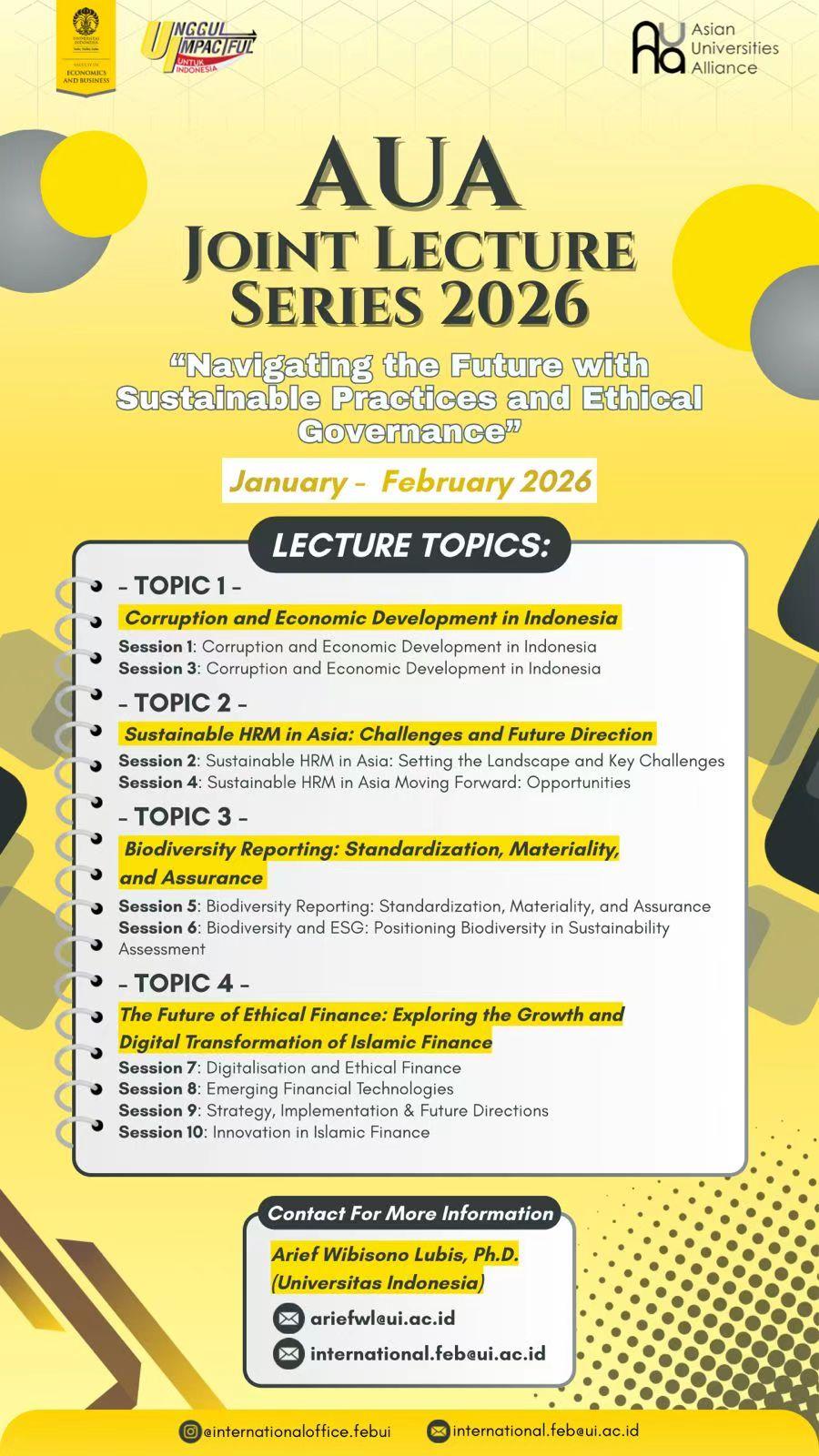
Topic 1: Corruption and Economic Development in Indonesia
Exploring the relationship between institutional quality and economic outcomes, this topic examined the case of Indonesia through multiple analytical perspectives. In the lecture “Corruption and Economic Development in Indonesia,” Dr. Yohanna Magdalena Lydia Gultom from Universitas Indonesia, examined how public policy and governance structures shape local economic development. Complementing this perspective, Dr. Elisabeth Kramer of the University of New South Wales applied a structured “what–why–how” framework, offering a systematic lens for understanding corruption and its broader implications.
Together, these sessions underscored the importance of institutional integrity in fostering sustainable and inclusive growth, while providing evidence-based insights into strengthening governance capacity.
Topic 2: Sustainable HRM in Asia: Challenges and Future Directions
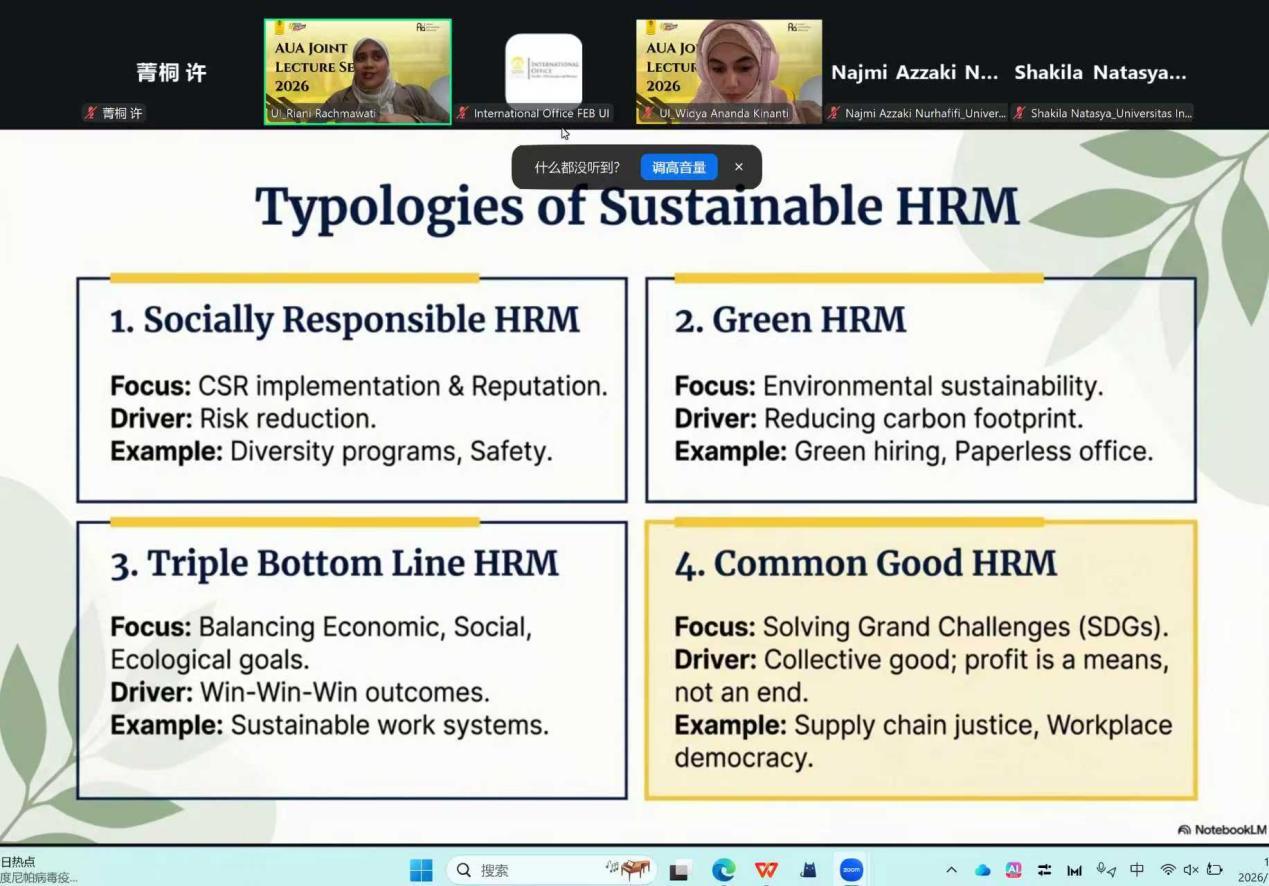
Amid rapid socio-economic transformation across the region, this topic advanced discussions on people-centered approaches to sustainability in human resource management (HRM). Two lectures delivered by Dr. Riani Rachmawati and Dr. Nayunda Adhika Sari, both experts from Universitas Indonesia, addressed the foundational landscape and future directions for sustainable HRM in Asia.
Particular emphasis was placed on the concept of “Common Good Human Resource Management,” highlighting the alignment between organizational performance and broader societal well-being. The discussions examined key challenges while identifying strategic pathways for developing resilient, responsible, and future-oriented human resource systems.
Topic 3: Biodiversity Reporting: Standardization, Materiality, and Assurance
Reflecting growing global attention to environmental accountability, this topic explored biodiversity reporting as a critical component of ESG (Environmental, Social, and Governance) frameworks. Through lectures by Prof. Mi Sun Park of the Seoul National University and Prof. Desi Adhariani of Universitas Indonesia, participants engaged with both foundational principles and evolving applications in sustainability reporting.
The lectures offered a structured exploration of key characteristics shaping effective biodiversity disclosure, including standardization, materiality, assurance, and the positioning of biodiversity within broader sustainability assessment frameworks, among others. These discussions emphasized that biodiversity is not a peripheral concern, but an integral element of corporate accountability and long-term value creation.
By linking ecological responsibility with institutional and financial decision-making, this topic highlighted the need for more rigorous, transparent, and context-sensitive reporting practices, alongside credible mechanisms for assessment and assurance.
Topic 4: The Future of Ethical Finance: Exploring the Growth and Digital Transformation of Islamic Finance
Focusing on the evolution of financial systems in an increasingly digitalized world, this topic focused on ethical finance with particular attention to Islamic finance and its future trajectory. Across multiple sessions, four lecturers explored key dimensions including digitalization, emerging financial technologies, strategic implementation, and sectoral innovation.
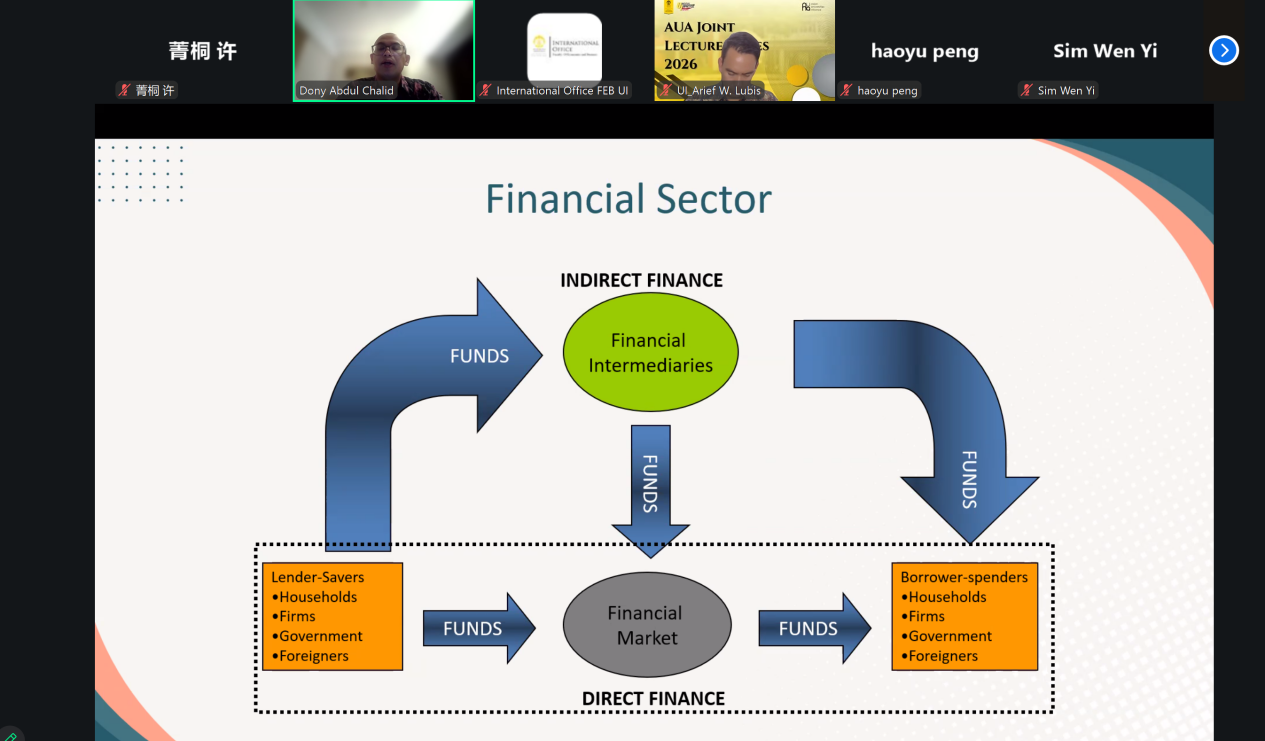
Dr. Ashish Singh from IIT Bombay analyzed how digital transformation and fintech integration are accelerating growth. Dr. Dony Abdul Chalid from Universitas Indonesia, highlighted the role of Islamic finance in promoting greater financial equity, while Prof. Mehmet Asutay from Durham University examined structural shifts in financing models alongside the growing importance of ethical governance.
The series further extended this discussion to emerging issues at the intersection of technology and law. In his lecture on AI and Copyright Law, Dr. Jose Berengueres of Nazarbayev University analyzed the legal challenges posed by generative artificial intelligence, including questions of authorship, ownership of AI-generated outputs, and intellectual property disputes related to training data. This perspective underscored the growing importance of aligning technological innovation with robust legal and ethical frameworks.
The AUA Joint Lecture Series 2026 provided a rigorous and forward-looking academic platform that effectively bridged multiple domains, including HRM, sustainability, finance, and digital transformation. Through its structured design, the series facilitated meaningful intellectual exchange and deepened participants’ understanding of complex regional and global challenges.
More notably, for the first time, the AUA Joint Lecture Series have secured official credit recognition. This milestone not only builds a more standardized platform of curricular resources for faculty and students across AUA, but also opens up broader prospects for future collaborative course development and joint talent cultivation among member universities.
By integrating theoretical analysis with practical perspectives, the program not only broadened academic horizons but also reinforced the importance of sustainable practices and ethical governance. It further strengthened collaboration among AUA member universities and contributed to the development of globally engaged talent.
Full recordings of all 10 sessions are available on the official AUA website:
http://www.asianuniversities.org/lectureseries/
Writer: XU Jingtong | Edited by: Kim Bridget B. Tan