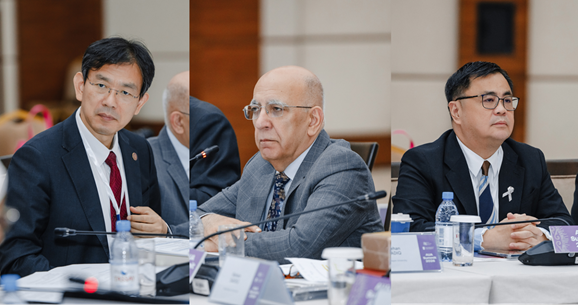
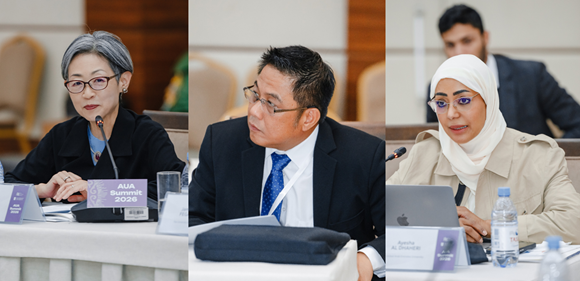
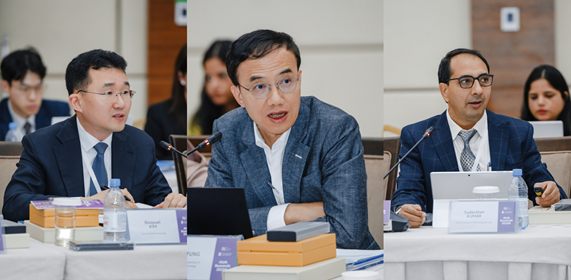
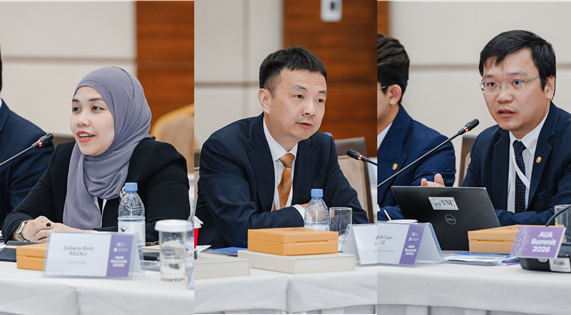
The AUA Board Meeting 2026 was successfully convened on June 2, 2026, in Astana, Kazakhstan. Hosted by Nazarbayev University, the meeting brought together over forty representatives from member universities and an observing institution to review the Alliance’s achievements, discuss future priorities, and strengthen collaboration among higher education institutions across Asia.
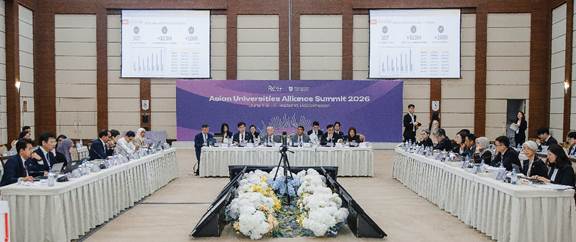
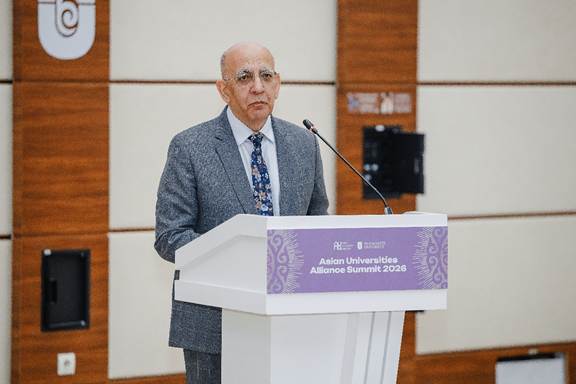
Prof. Waqar Ahmad, President of Nazarbayev University, delivered the welcome remarks. He highlighted the importance of AUA as a platform for advancing collaboration, innovation, and mutual learning among Asia’s leading universities and reaffirmed the shared commitment of member universities to addressing regional and global challenges through higher education.
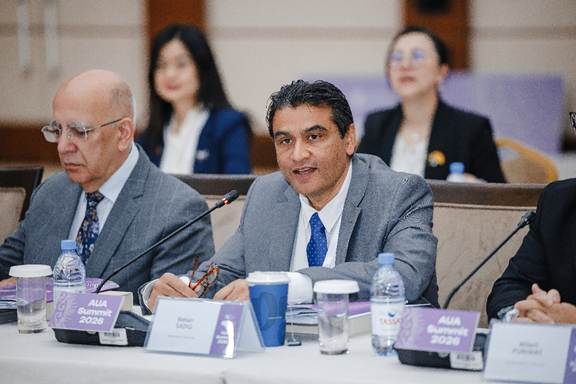
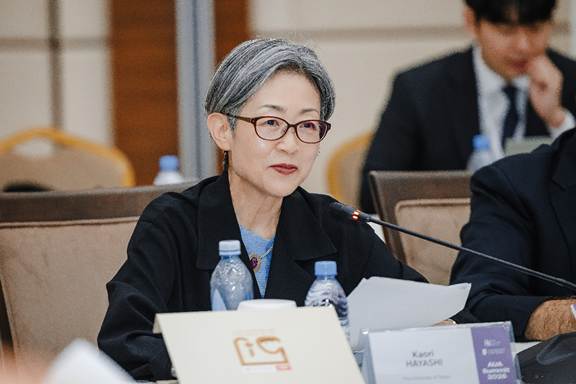
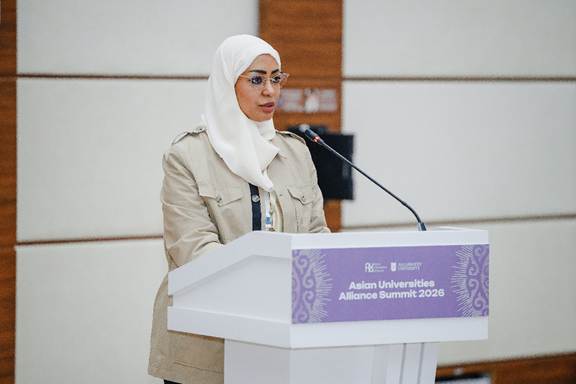
The Board Meeting was structured into three sessions. The first session, chaired by Prof. Kaori Hayashi, Executive Vice President of The University of Tokyo, focused on reviewing the Alliance’s work during the 2023–2026 term. On behalf of Prof. Ahmed Alraeesi, AUA President and Vice Chancellor of the United Arab Emirates University, Prof. Ayesha Aldhaheri presented the AUA Work Review 2023–2026. She highlighted the successful implementation of 63 AUA programs under the themes of Artificial Intelligence and Data Science, Asian Civilization, Public Health, and Future Habitats, as well as the continued growth of student mobility, academic exchange, and collaborative research across the Alliance. She also reviewed the achievements of the UAEU-AUA Joint Research Program, which supported over 100 collaborative research projects.
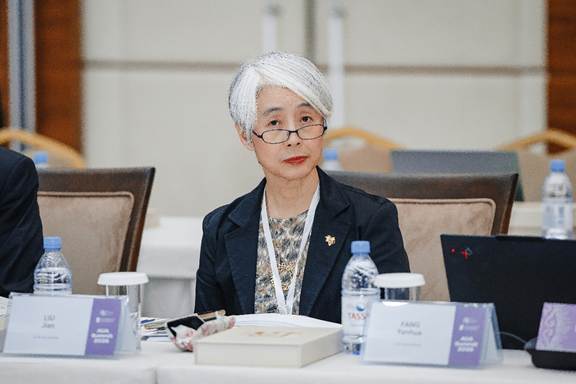
Prof. Liu Jian, AUA Secretary, presented the AUA Financial Statement 2025–2026. Representatives of the AUA Working Group on Financial Sustainability and the AUA Working Group on Member and Observer Admission subsequently reported on their progress and recommendations. Following discussion, the Board reviewed and approved the financial statement, endorsed the recommendations of the two working groups, and adopted a series of resolutions concerning the future development of the Alliance.
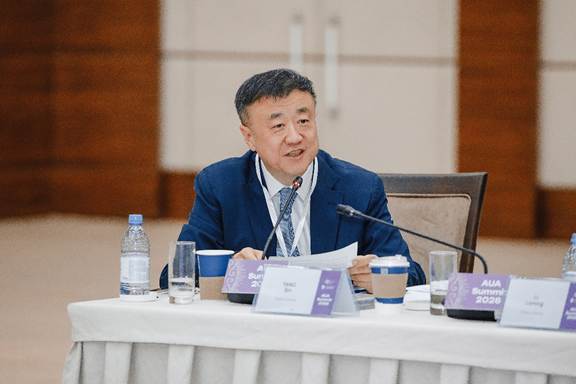
The second session, chaired by Prof. Yang Bin, Vice Chancellor of Tsinghua University Council, focused on the handover of AUA leadership.
During the Handover of AUA Presidency segment, a token of appreciation was presented to the United Arab Emirates University in recognition of its leadership and contributions as AUA Presidency for the 2023–2026 term.
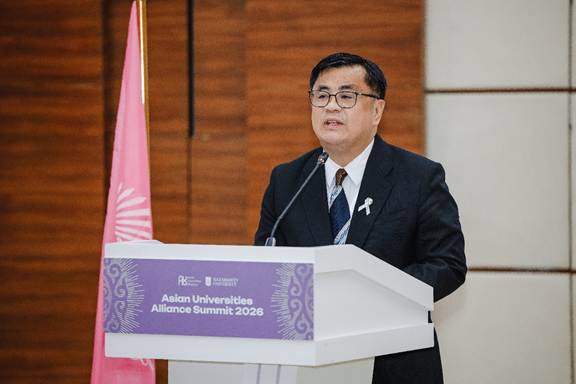
Following a briefing on the AUA Presidency for 2026–2029, the Board confirmed Chulalongkorn University as the incoming AUA Presidency and Prof. Wilert Puriwat, President of Chulalongkorn University, as AUA President for 2026–2029. In his address, Prof. Puriwat reaffirmed Chulalongkorn University’s commitment to strengthening academic collaboration, student mobility, and partnerships across Asia. He also announced the 2027 AUA Summit, which will coincide with the 10th anniversary of the Alliance, will be held in Bangkok, Thailand.
The Board subsequently proceeded to the Handover of AUA Executive Presidency. A token of appreciation was presented to Seoul National University for its service as AUA Executive Presidency for 2025–2026. The Board then confirmed Nazarbayev University as the incoming AUA Executive Presidency for 2026–2027, with Prof. Waqar Ahmad serving as AUA Executive President.
The third session focused on planning the future direction of the Alliance. Prof. Liu Jian introduced the AUA Framework 2026–2029, the AUA Programs 2026–2027, and the AUA Budget 2026–2027. Following discussion, the Board reviewed and approved the Framework, annual programs, and budget.
The session was followed by remarks from delegation heads representing member universities, who provided suggestions on AUA's future directions and shared perspectives on the development of the Alliance in sequence.
The AUA Board Meeting 2026 has providing an important platform for member universities to review achievements, strengthen partnerships, and chart the future direction of the Alliance. Through continued collaboration and shared commitment, AUA will further contribute to academic excellence, innovation, and sustainable development across Asia.
(Writer: WANG Sa; Editor: Xiaodan CAI)