The AUA-THU Overseas Study Program 2026 — Summer School for Future Power and Energy Systems (FPES) was successfully held at Tsinghua University in August 2026. Organized by the Department of Electrical Engineering at Tsinghua University under the Asian Universities Alliance (AUA) framework, the program brought together 35 students from 25 universities across 21 countries for academic lectures, technical visits, field study, cultural activities, and intercultural exchange.
Focusing on future power and energy systems and the global energy transition, the program provided an international learning platform for students to explore emerging technologies, connect academic knowledge with engineering practice, and exchange perspectives on energy development across different countries and regions.
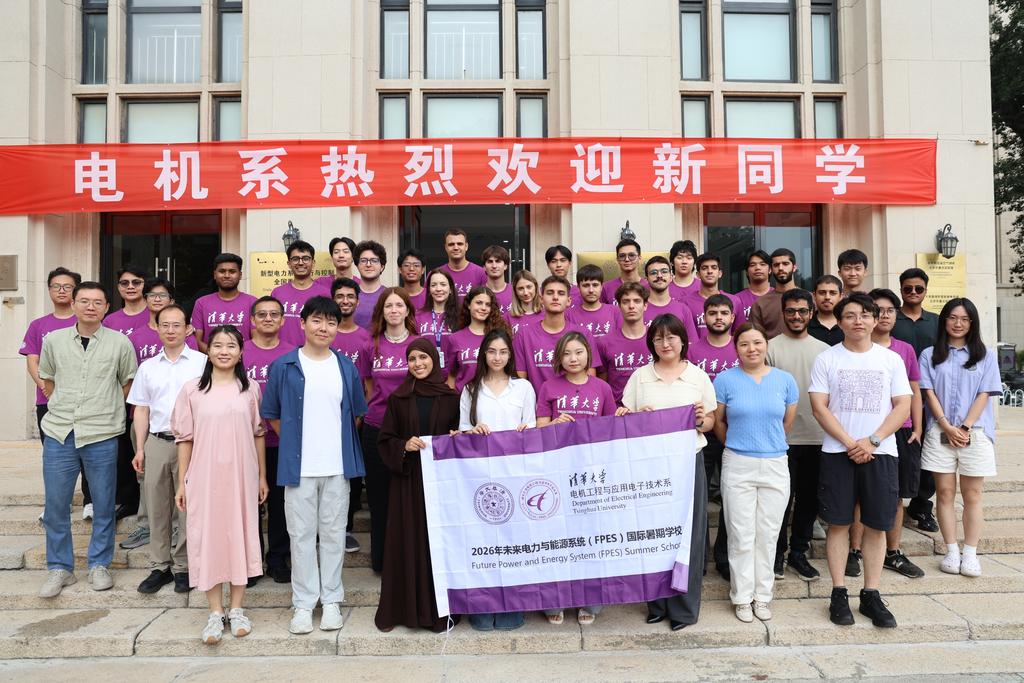
Learning: Exploring the Frontiers of Future Power and Energy Systems
This summer school officially opened on August 10 at Tsinghua University. Chongqing Kang, Chair of the Department of Electrical Engineering; Kai Sun, Vice Chair of the Department; and Zechun Hu, Director of the FPES Summer School, attended the opening ceremony.
The academic part of this program featured nine specialized lectures delivered by scholars and experts from China and abroad, including Bikash C. Pal, Foreign Member of the Chinese Academy of Engineering, Distinguished Visiting Professor at Tsinghua University and Professor at Imperial College London, and José Rodríguez, Member of the Chilean Academy of Engineering and Distinguished Visiting Professor at Tsinghua University.
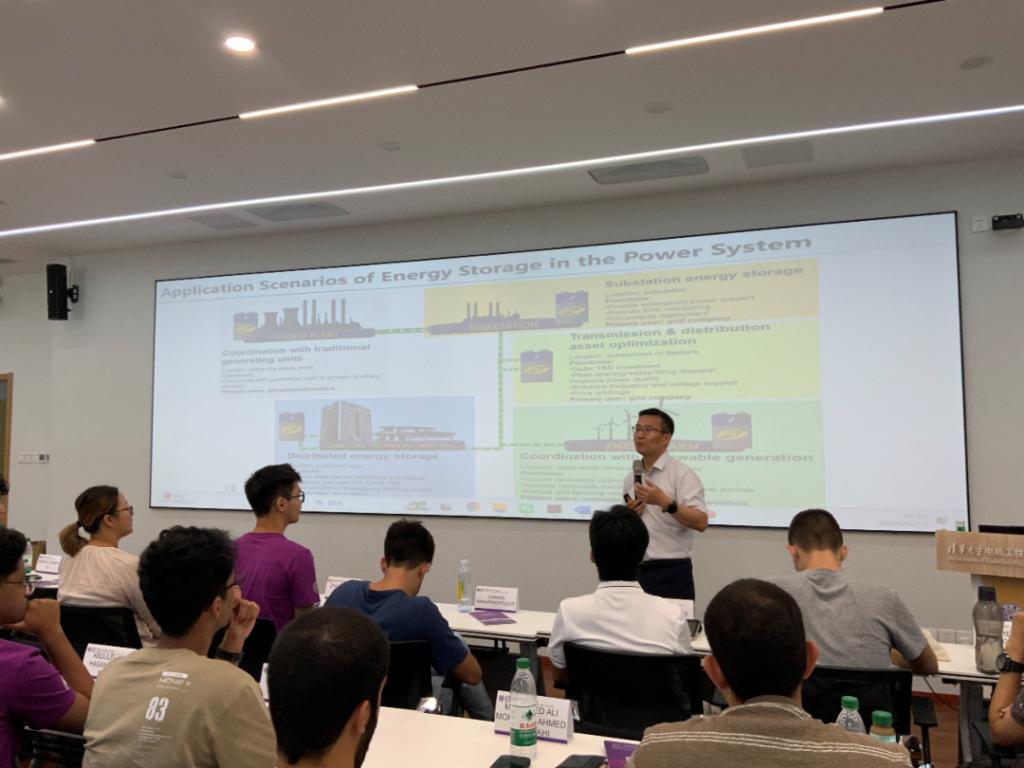
The lectures covered a broad range of topics related to future power and energy systems, including energy storage and new power systems, data center energy demand and flexibility, wireless power transfer, photovoltaic power generation, magnetic materials and sensing, power system fault analysis, power electronics and the energy transition, and power electronics for renewable energy.
Combining fundamental knowledge, emerging technologies, and engineering applications, the lectures also provided opportunities for discussion and interaction. Drawing on their academic backgrounds and national contexts, participants exchanged views on different technological approaches and examined how variations in energy resources, geography, infrastructure, and levels of development influence energy transition pathways.
Participants worked in groups to study the power systems of their respective countries or regions. Their final presentations examined topics including changes in generation structures, energy storage deployment, and the operation of future power grids. The group research enabled participants to compare different national and regional experiences while gaining a broader understanding of both the common challenges and diverse pathways associated with the global energy transition.
Technical Visits: From the Classroom to Engineering Practice
To complement classroom learning, the program tailored a series of technical visits to research laboratories, enterprises, and engineering education facilities in Beijing.
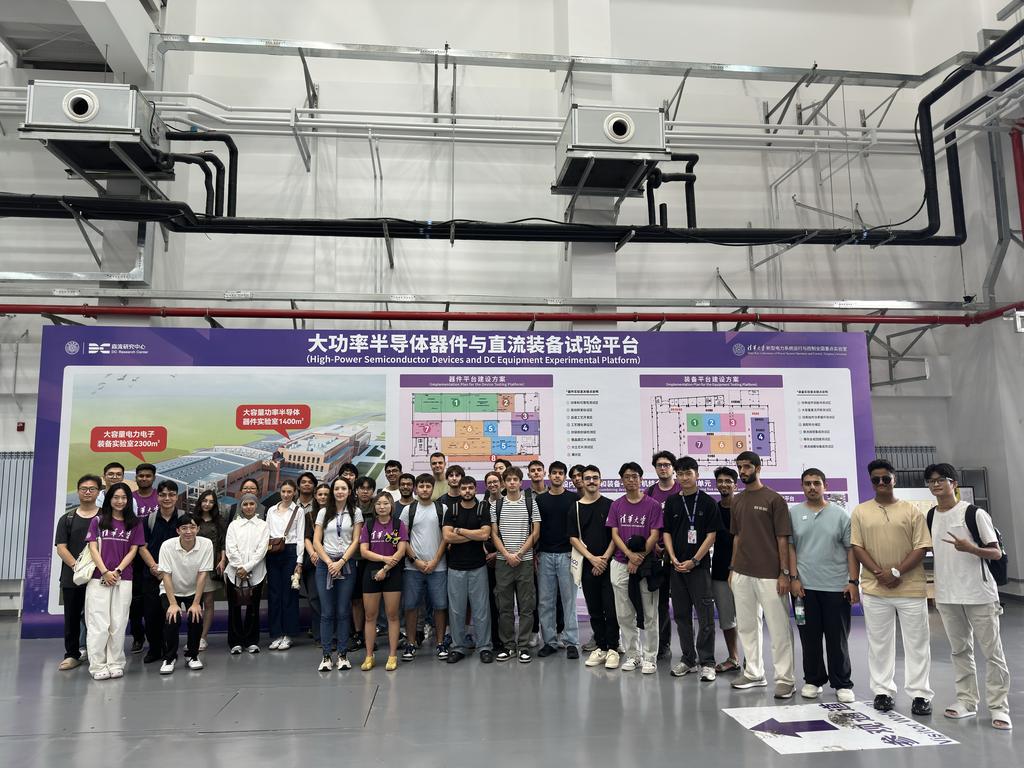
At Tsinghua University, participants visited the State Key Laboratory of Power System Operation and Control, where they explored research platforms and experimental facilities and learned about research and applications related to power system operation and control.
Participants also visited State Grid Smart Internet of Vehicles Technology Co., Ltd. and the NIO Experience Center in Beijing. Through demonstrations and discussions, they learned about smart electric vehicle service platforms, battery-swapping stations, charging and swapping infrastructure, and the interaction between electric vehicles and power systems.
The program further introduced participants to Tsinghua’s practice-oriented engineering education through a visit to the Fundamental Industrial Training Center (iCenter) at Tsinghua University. Program participants toured laboratories focusing on intelligent manufacturing, forming and processing, and robotics innovation, where they were introduced to advanced manufacturing equipment, robots, robotic dogs, precision machining, and student innovation projects. The visit provided participants with an opportunity to learn how engineering knowledge relates to practical training and innovation education.
Field Study in Zhangbei: Understanding Renewable Energy Development
On August 21 and 22, the program was extended beyond Beijing to Zhangbei in Zhangjiakou, Hebei Province, for field studies on renewable energy development and regional power systems.
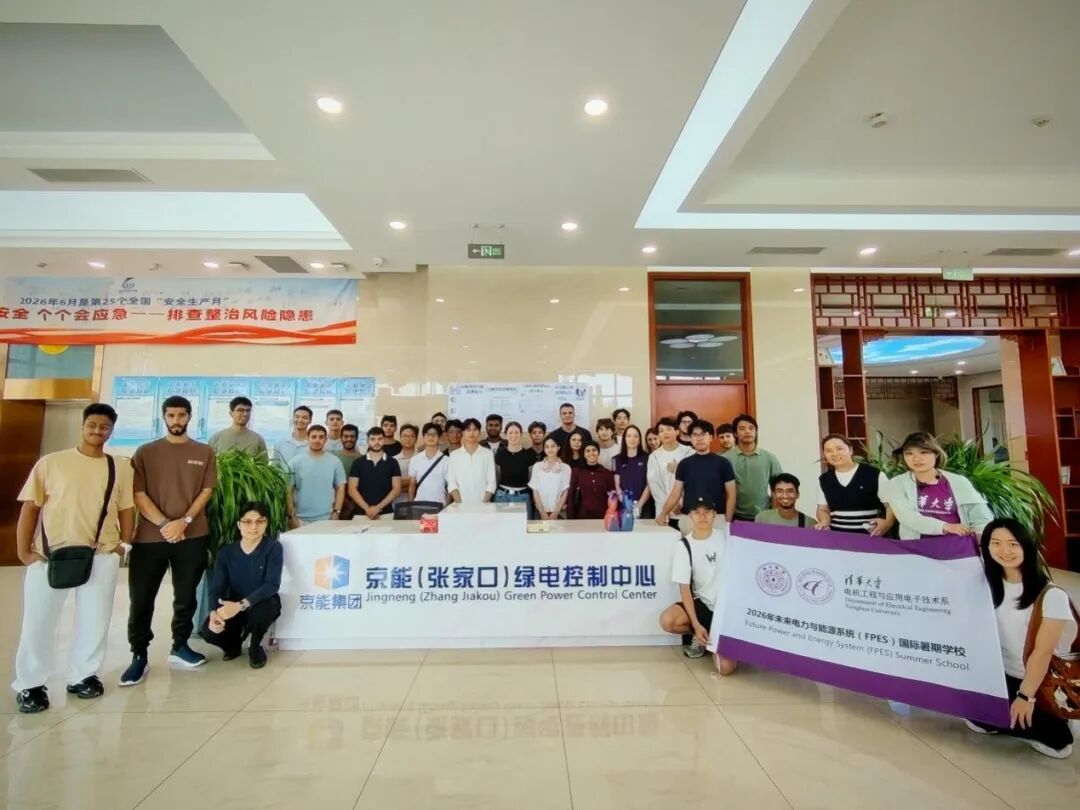
At the Beijing Energy Zhangjiakou Green Power Control Center, participants learned about the operation and dispatch of large-scale wind power projects, green electricity transmission and consumption, energy storage, and the development of renewable energy bases. Discussions with professionals provided participants with further insight into the practical challenges involved in integrating renewable energy into power systems.
Participants also visited wind power facilities in Zhangbei, gaining a closer understanding of the scale of renewable energy development in northern China and the relationship among renewable resources, power infrastructure, energy storage, and emerging electricity demand.
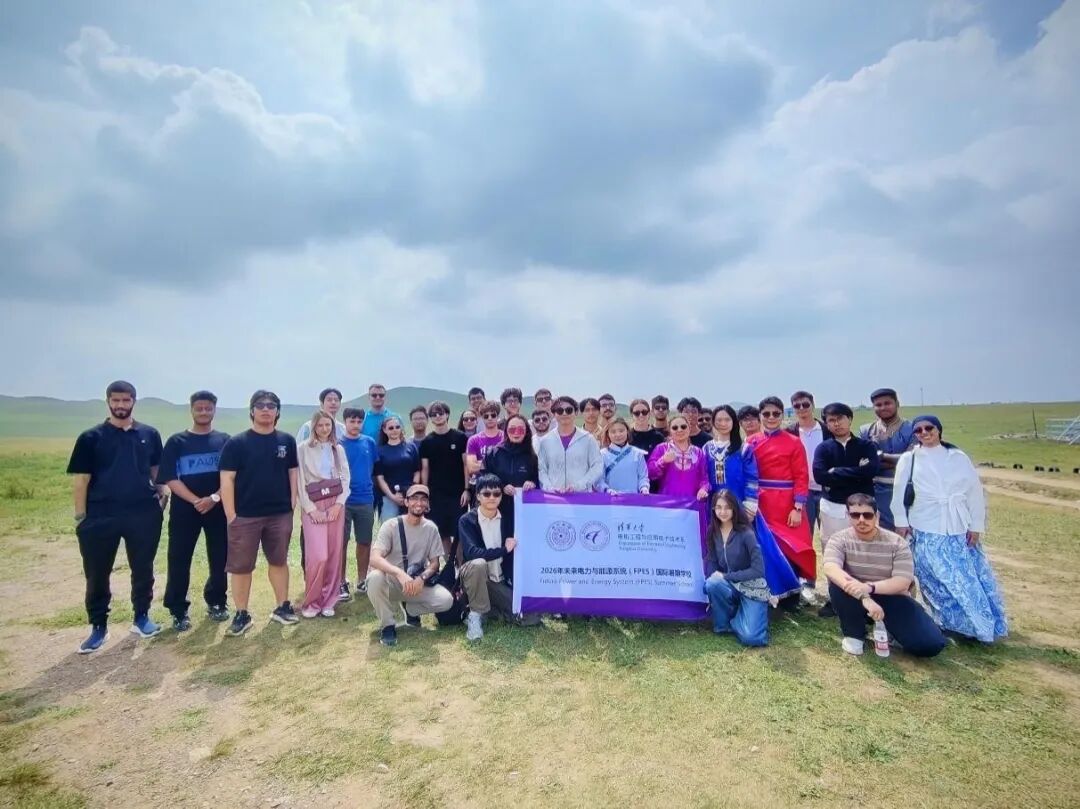
The field study was complemented by a visit to Gongbaolage Grassland, where students experienced the local natural landscape and cultural heritage. The visit provided an opportunity to learn about the connections among ecological conditions, regional development, natural resources, and renewable energy development.
Cultural Exchange: Experiencing China Beyond the Classroom
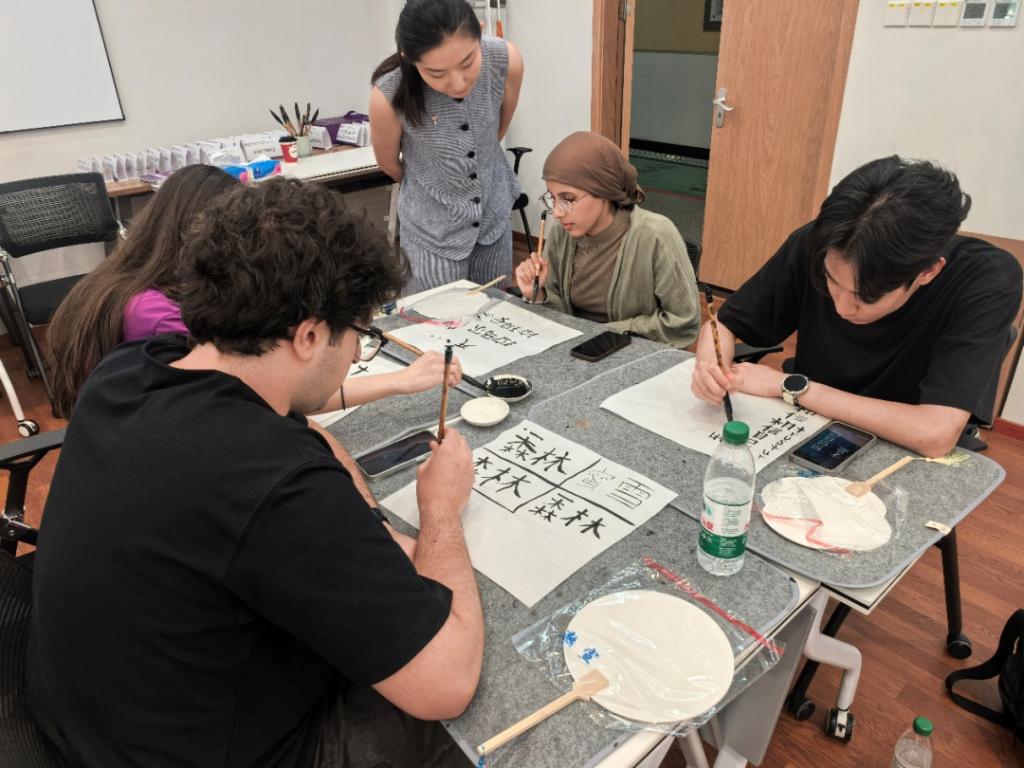
Alongside academic and technical activities, the summer school included a range of cultural experiences introducing participants to Chinese traditions and history.Participants took part in a variety of Chinese calligraphy, lacquer fan making, guzheng, and martial arts activities, gaining first-hand experience of traditional Chinese arts and cultural practices. They also visited cultural and historical sites in Beijing, including the Temple of Heaven, the Beijing Ancient Architecture Museum, and the Great Wall.
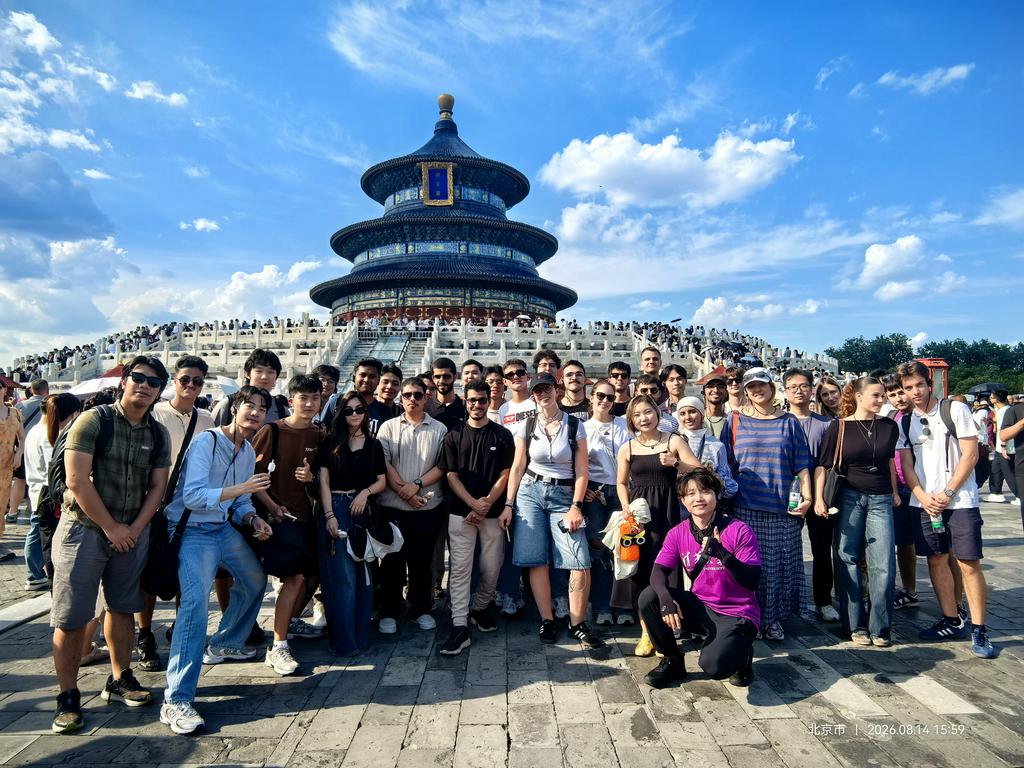
Informal interaction among participants was another important part of the program. Students organized sports activities, shared food from their home countries, exchanged music, and spent time together outside the scheduled sessions. Through group projects, daily interactions, cultural activities, and travel, participants from different countries and universities had opportunities to learn from one another and develop friendships across academic and cultural backgrounds.
Closing Ceremony: Reflecting on the Summer School Experience
The program concluded with a closing ceremony on August 20, where Kai Sun, Zechun Hu, and participating faculty members presented certificates to the students. Student representatives also shared reflections on their experiences at the summer school. They highlighted the value of connecting theoretical learning with engineering practice, gaining exposure to emerging technologies, experiencing Chinese culture, and interacting with students from different countries. Their reflections also demonstrated the value of international learning opportunities in broadening students' perspectives on power and energy systems. Through lectures, technical visits, field study, and cultural exchange, participants gained a broader understanding of different approaches to energy development and the opportunities and challenges associated with future power systems.
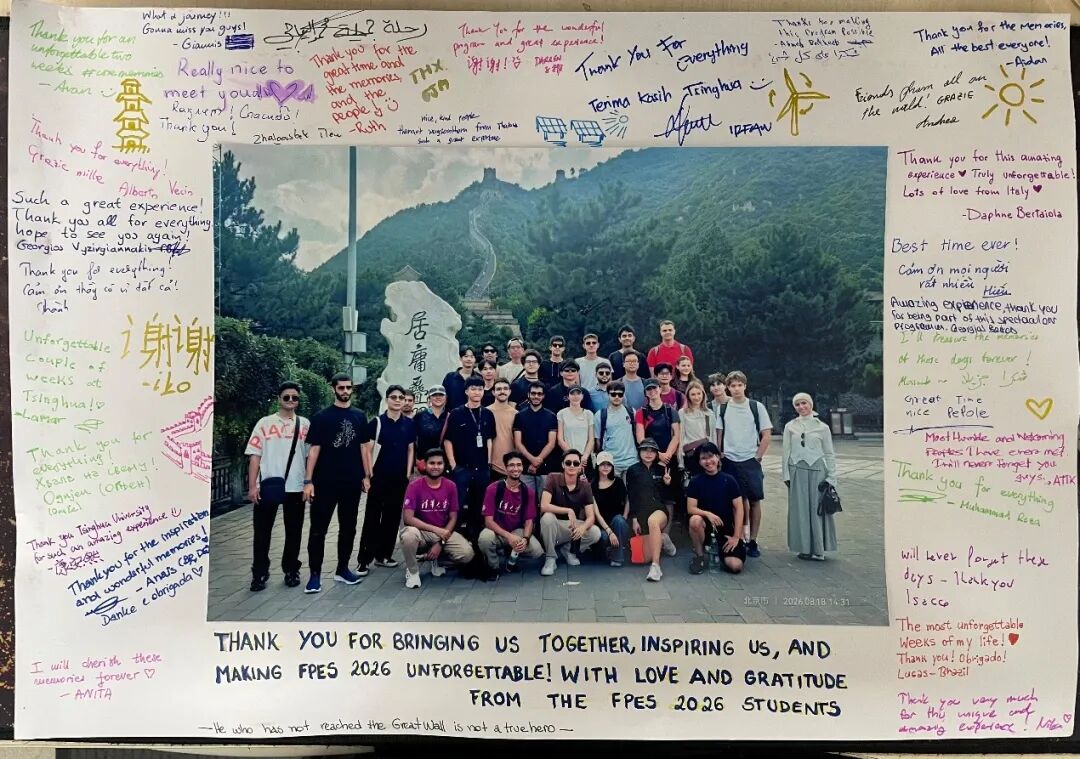
Through the AUA-THU Overseas Study Program, the 2026 FPES Summer School connected academic learning with engineering practice, field-based learning, and cultural exchange. By bringing together students from AUA member universities and other institutions across different countries and regions, the program provided opportunities for participants to exchange perspectives, develop international academic networks, and gain a broader understanding of developments in future power and energy systems.
(Writer: ZHANG En'ning | Editor:Kim Tan, CAI Xiaodan | Source: Department of Electrical Engineering)