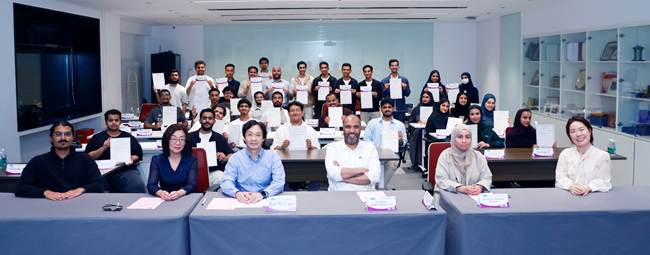
From September 18 to 27, 2026, a delegation of 3 faculty members and 31 students from King Saud University (KSU) participated in the Tsinghua Interdisciplinary Exploration International Summer School Program at Tsinghua University, Beijing. As fellow members of the Asian Universities Alliance (AUA), Tsinghua and KSU brought together students for a ten-day immersive experience combining interdisciplinary learning, innovation exploration, youth dialogue, field-based learning, and cultural exploration. Rather than focusing on a single academic field, the program encouraged students to explore a broader question: how can young people understand a rapidly changing world by connecting technology, leadership, entrepreneurship, society, and culture?
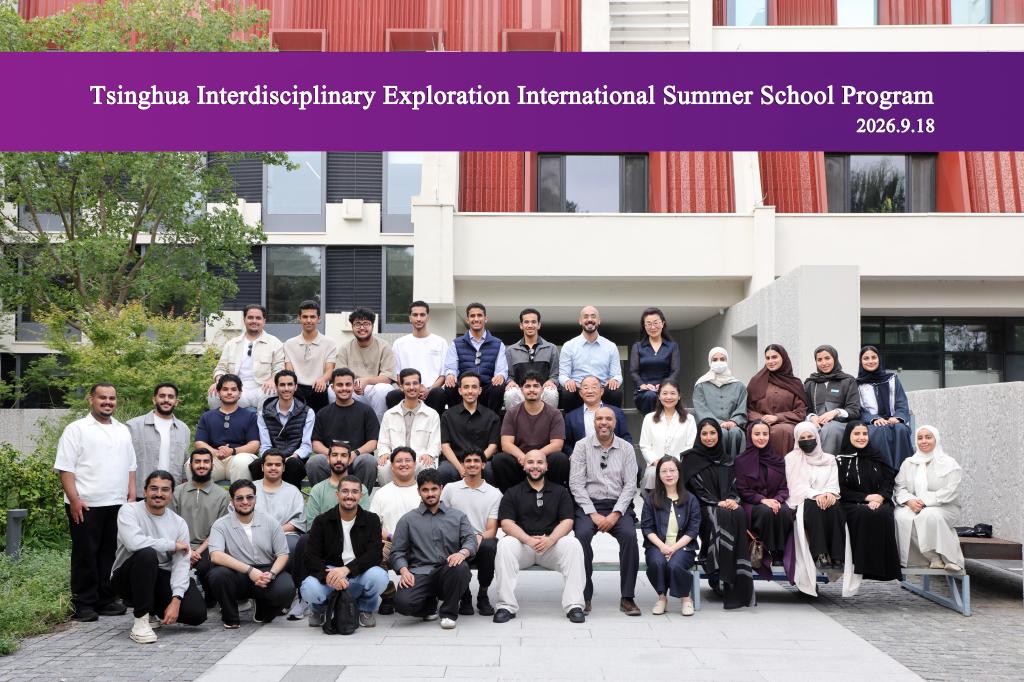
Interdisciplinary Learning Across Boundaries
The academic component of the program covered a vast range of subjects, including leadership, innovation and entrepreneurship, artificial intelligence, robotics, semiconductor technology, intelligent manufacturing, and cross-cultural communication. For students from different academic backgrounds, the experience offered an opportunity to move beyond disciplinary boundaries, discover connections across fields, and understand how different areas of knowledge contribute to addressing contemporary challenges.
Mohammed Aldaham, a finance student from KSU, reflected on how the program broadened his perspective. The courses helped him realize how “technology and leadership complement each other” and gave him a new perspective on “how finance can support innovation and smart decision-making.” His reflection captured a central objective of the program: encouraging students to connect their academic specializations with wider technological and social change landscape.
Youth Dialogue: Building Cross-Cultural Understanding
One of the program’s most distinctive features was the opportunity for direct interaction between young people from different cultural backgrounds. The China–Saudi Arabia Youth Dialogue brought KSU students together with Chinese and international students studying in Beijing through youth talks, networking activities, and small-group discussions on academic life, future plans, communication styles, family expectations, and cultural identity. The interactive format encouraged open conversation allowing students to move beyond assumptions and discover shared interests and experiences.
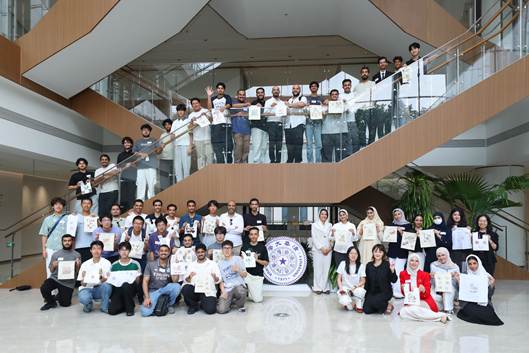
For Faris Aldaham, the conversations revealed unexpected common ground. “The conversations flowed naturally since we had a lot in common,” he said. He also observed that Chinese students had “a lot of character and energy that really shows once you start talking to them,” an impression that made the exchange feel personal rather than ceremonial. In this sense, the dialogue was not just a formal event; rather it became a space where students could discover how much genuine conversations can reshape perceptions across cultures.
Innovation in Action: From Campus Labs to Industry
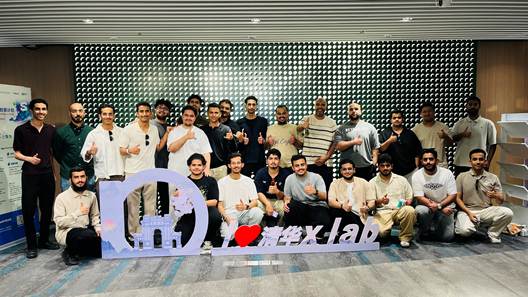
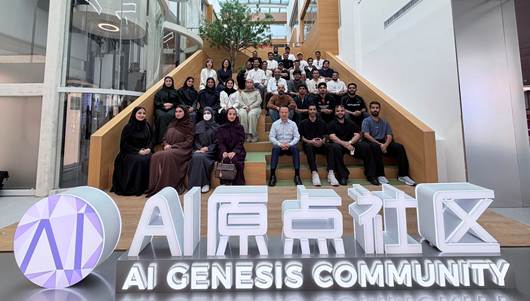
The program extended beyond the classroom through visits to Tsinghua x-lab, the AI Genesis Community, iFLYTEK, and Tsinghua’s Fundamental Industry Training Center (iCenter). These visits allowed students to see how ideas develop from university-based experimentation and entrepreneurship into technology ecosystems, engineering practice, and industrial applications. Rather than presenting innovation as an abstract concept, the visits exposed students to the institutions, teams, products, and environments through which innovation takes shape.
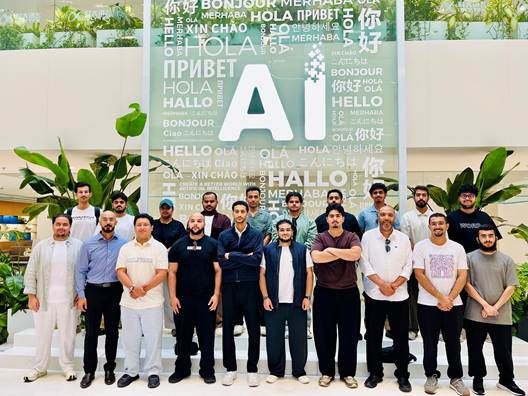
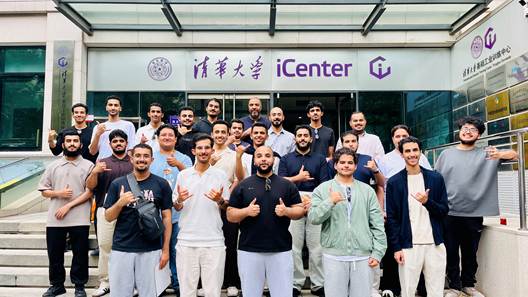
Sultan Almuteb was particularly impressed by iFLYTEK and its development from a student initiative into a major Chinese AI company. Reflecting on what he observed, he said the visit showed that “successful innovation requires long-term research, investment, and a clear vision.” He connected this lesson with Saudi Arabia’s own ambitions in artificial intelligence under Vision 2030. His reflections highlighted another feature of the program: students were encouraged not only to observe China’s innovation landscape, but also to relate this experience with the future development of their own country.
Culture Through Experience: Heritage, City, and Craft
Cultural learning formed an equally important part of the experience. Visits to the Forbidden City, Temple of Heaven, and Great Wall offered students a direct encounter with China’s historical heritage, while the “Impression Beijing” City Exploration invited them to observe the capital through everyday life: its streets, neighborhoods, public spaces, transportation, and urban rhythms. Beijing itself became part of the learning environment, revealing how historical continuity and contemporary development coexist within the same city.
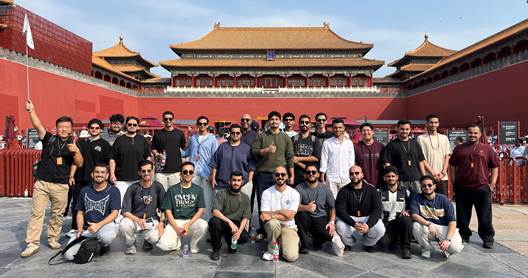
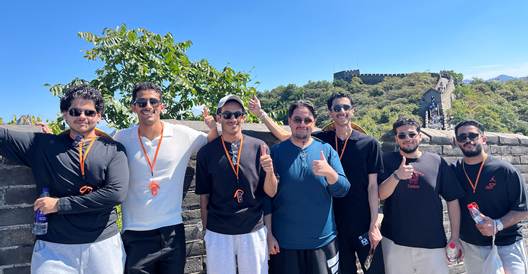
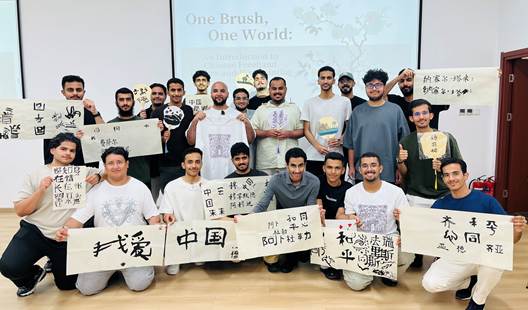
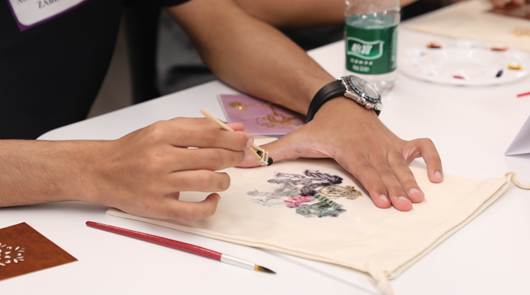
That coexistence left a strong impression on Aryam Almutlaq. “I expected it to be either very traditional or just a big modern city, but it’s both,” she said, describing how modern buildings and traditional neighborhoods could exist just minutes apart. Hands-on activities, including Chinese calligraphy, painting, Mid-Autumn Festival activities, and traditional craft experiences, added another layer to this cultural exploration. Mohammed Alsudais described the calligraphy workshop as “less of an artistic exercise and more of a profound dialogue between motion, thought, and tradition.” Such moments shifted cultural learning from observation to participation, allowing students to experience traditions through practice and personal reflection.
A Foundation for Broader Bilateral Cooperation
Reflecting on the ten-day experience, Dr. Ibrahim Aldobiyan, Head of the KSU delegation, emphasized the breadth of learning and exposure the program provided. “The most valuable aspect has been the breadth of exposure the students have gained—academically, professionally, and culturally,” he said. He noted that the experience went beyond conventional classroom learning by combining academic sessions, leadership and innovation activities, institutional and industry visits, and meaningful interaction with Tsinghua students. He also observed growth in students’ confidence, communication, adaptability, and sense of responsibility.
Beyond the immediate benefits to the participating students, the program offered a foundation for expanding cooperation between the two universities. “I truly believe this program is an important foundation for a broader and more sustainable relationship between King Saud University and Tsinghua University,” Dr. Aldobiyan added. He identified student exchanges, joint training initiatives, collaborative research, and other areas of mutual interest as potential directions for future cooperation.
By bringing together interdisciplinary learning, real-world exploration, cultural experience, and youth-to-youth dialogue, the summer school program created multiple ways for KSU students to engage with Tsinghua and contemporary China. It empowered young people to learn from each other, question assumptions, and build long‑lasting relationships that extend well beyond the duration of the program. These meaningful people‑to‑people connections in turn strengthened bilateral bonds between the two universities and nations. More importantly, rooted in the framework of AUA, this initiative sets a replicable practical model for student‑centered exchange among other AUA‑member institutions.
Source: School of Continuing Education, Tsinghua University
Editor: Dr. Rashid Malik